
Verified Aliso Viejo City Directory Collections
Aliso Viejo does not have a verified, stand-alone residential directory run with a confirmed publisher and complete year span. The reliable starting shelf is broader: Orange County government archives, regional telephone or city directories, local planning files, newspapers, deeds and maps, and census material. The table keeps the years and access language narrow so a regional reference is not mistaken for an invented Aliso Viejo volume.
| Collection | Years | Where Held | Access |
|---|---|---|---|
| Orange County government archives | 1889-present, series-specific | OC Archives, Old Courthouse | Catalog and appointment; deeds, maps, photos, births and marriages, directories and newspapers described |
| Aliso Viejo permit and planning records | Community development era; city files principally 2001+ | City Clerk and Building | CPRA or counter; pre-incorporation approvals may be county files |
| Regional telephone and city directories | Likely late-20th-century regional runs | OC Archives, OCPL catalog, LOC telephone directories | Exact Aliso Viejo-inclusive titles and years not verified |
| Historical census | 1790-1950 public; 1960 scheduled 2032 | NARA, FamilySearch, library databases | 72-year federal rule; 1950 predates the Aliso Viejo community |
| Newspapers | Orange County titles, title-specific years | OC Archives, newspaper and library databases | Keyword and OCR searches; onsite subscriptions may apply |
| Recorded deeds and maps | County formation 1889 forward; predecessor Los Angeles County earlier | Clerk-Recorder and OC Archives | Index and copies; archival books and maps |
| Historic aerials and topographic maps | 20th century, series-specific | USGS, UC collections, OC Archives | Online or reading-room access |
Several rows are finding aids, not direct resident lists. The regional row has late-20th-century likelihood but no verified Aliso Viejo-inclusive title or year. Census is open through 1950, but that date predates Aliso Viejo as a modern community. Deeds and maps provide land context, not household coverage.
The California Revealed collections portal is an online route to digitized local-history contributions, and its catalog belongs in the first pass when a local title is not visible on an open shelf.
A result there can point to a contributing institution or item. Confirm the place, date, and scope before treating a digitized item as an Aliso Viejo city directory.
Before Aliso Viejo Had a City Directory
Aliso Viejo's record story begins before a city directory could carry the name. Orange County was created from Los Angeles County in 1889. The local land story reaches back to Juan Avila's 1842 grant and Moulton family ownership in the 1890s. Mission Viejo Company purchased the last 6,600 acres in 1976, and the county approved the master plan in 1979. First home sales began in March 1982, with residents arriving later that year. City government began on July 1, 2001. The official Aliso Viejo history gives the clearest source for that sequence.
Those dates change the search terms. A pre-2001 record may sit in Orange County files, not City Hall. A pre-1982 hit may describe ranch land, construction, or commercial use rather than a suburban household. Search Rancho Niguel, Moulton Ranch, Mission Viejo Company, Laguna Niguel, and El Toro alongside Aliso Viejo. For earlier land, check predecessor Los Angeles County or Spanish and Mexican land-grant records. Put the era before the name query.
The Orange County Archives gateway shows the regional repository that connects government records, maps, photos, directories, and newspapers.
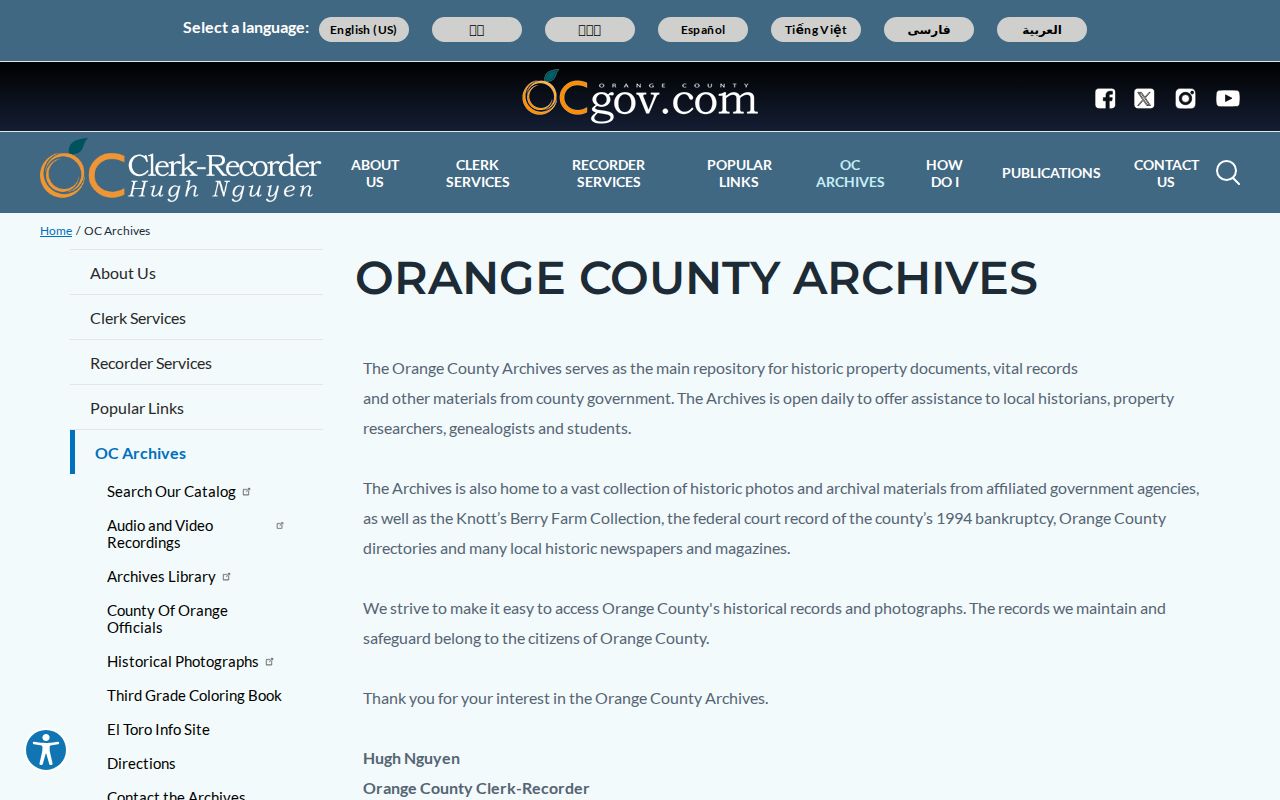
For Aliso Viejo, that wider county context is a strength: it preserves the land and development trail that a city directory alone cannot supply.
Aliso Viejo City Directory Evidence
One local sample is verified, but it is not a residential directory run. An environmental document for 26501 Aliso Creek Road reproduces a historical city-directory table. It names Pacific Bell editions for 1997 and 1999, then Cole Information Services editions for 2009 and 2014. The evidence records a property-specific commercial address, not a complete list of Aliso Viejo households, and it does not prove a library holding.
At that address, the 1997 and 1999 entries list Kmart Super Stores, Little Caesars, Perfuman 11A, and Pizza Station. The 2009 row lists K Tyner, Kmart, and Lowe's. The 2014 row lists Lowe's and Lowe's Home Improvement. The useful fields are year, use or occupant, street address, and publisher or source. A city directory entry can document use at an address without proving who lived nearby or who held title.
Note: The Aliso Viejo sample confirms directory evidence at one property, not an exhaustive local residential run.
Regional Search Terms for Aliso Viejo Directories
Regional names are not a detour from an Aliso Viejo city directory search. Older volumes may follow a telephone exchange, service area, or county-wide title rather than the modern municipal line. Search Laguna Niguel, Mission Viejo, El Toro, ranch names, nearby exchanges, and Orange County labels. A volume may cover the place now called Aliso Viejo without using that city name.
Search the Library of Congress telephone directory collection by place and date. Log the title page, publisher, date, place scope, and pages checked. Exact Aliso Viejo-inclusive titles and years remain unverified, so a regional catalog hit does not prove complete household coverage.
Reading an Aliso Viejo City Directory Entry
Library of Congress guidance gives a practical reading method for historical directory entries. An alphabetic section may show a resident name, spouse, occupation, and address. A reverse section arranges entries by street and number, sometimes with a telephone. Common marks include r for resides, h for householder, and wid for widow, but the volume's own abbreviation key controls. These marks are clues, not a deed or census substitute.
| Name | Record the name as printed, including initials, hyphens, and multiple surnames. |
|---|---|
| Spouse | A spouse may appear with the name; confirm the relationship in an independent record. |
| Occupation | A work description may appear; preserve the original wording without treating it as identity proof. |
| Address | Capture the house number and street, then compare spelling and nearby street context. |
| Household marks | r commonly means resides, h householder, and wid widow; meanings vary by volume. |
| Title or occupancy status | Do not infer either from a directory line; verify title in county records. |
- Criss-cross directory
- The street-order half of a directory, arranged by street and number and sometimes by telephone.
- Householder index
- An index centered on people identified as householders; the volume's own arrangement and marks govern.
- Abbreviation key
- The volume legend for marks such as r, h, and wid; inspect it before reading entries.
Aliso Viejo Archives for City Directories
Aliso Viejo Library at 1 Journey offers catalog access, public computers, Wi-Fi, and reference help; phone service is 949-360-1730. Hours are Monday through Thursday 10 a.m. to 7 p.m. and Friday through Saturday 9 a.m. to 5 p.m. The official branch description does not list a local city-directory run, reverse-directory set, obituary index, newspaper microfilm, Ancestry Library Edition, or HeritageQuest. Ask staff to check the OCPL catalog and verify titles and years.
The Aliso Viejo Library branch information supports online catalog work and in-person reference questions. OC Archives uses catalog and appointment access for county series. California Revealed and the Library of Congress supply digital paths, while a reference inquiry with place, title, and year tests the actual holding.
Directory research has a public-records fallback. City-created permits, plans, planning files, council materials, code records, business-registration files, and maps are held by City offices; city files are principally from 2001 forward, while pre-incorporation approvals may be county files. Use the Aliso Viejo forms and permits hub for the counter or request path, naming an existing series, address, permit number, or date range. Do not ask the City to create a resident directory.
The Aliso Viejo Helpful Links directory is a useful companion when a city directory clue points toward a civic group or institutional publication.
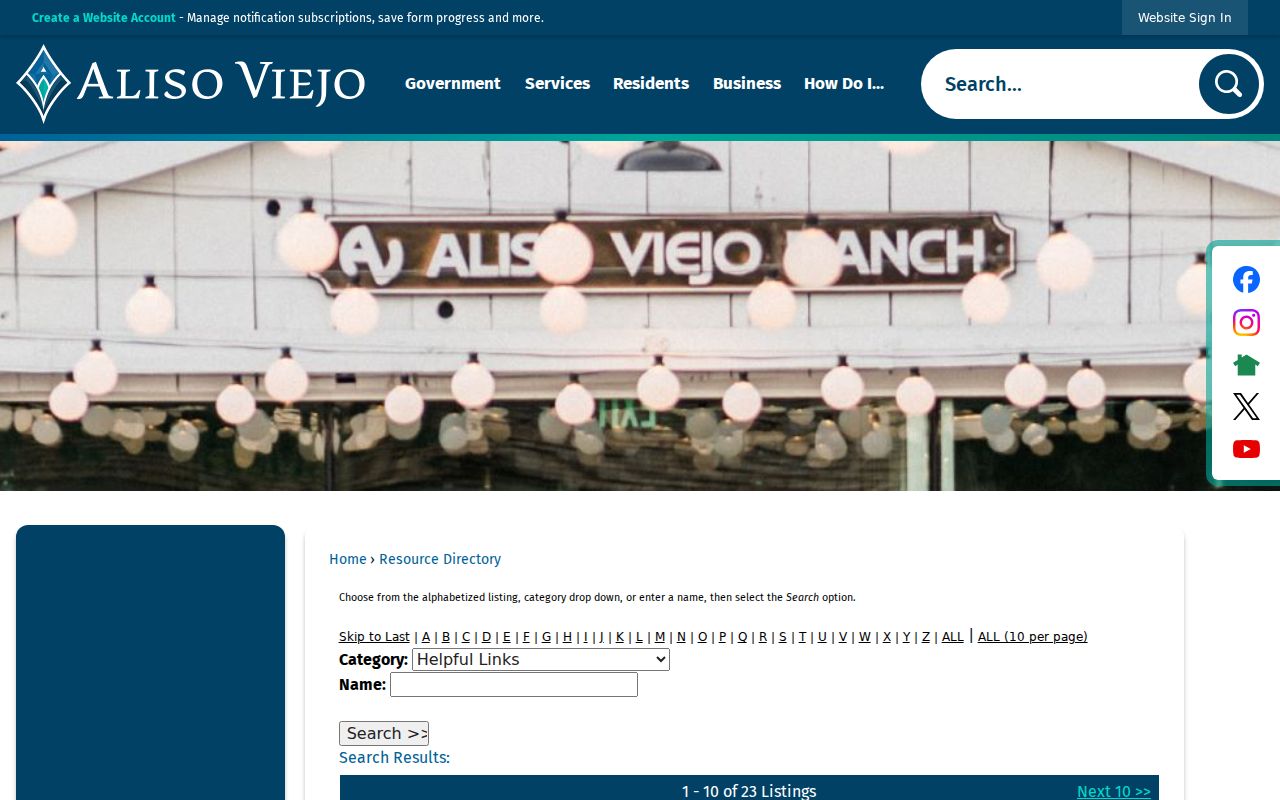
It lists public contact points for AVCA and civic organizations, but it should not be treated as a private membership roster. When a directory name needs modern independent confirmation, shift to the Aliso Viejo resident lookup rather than stretching an old volume beyond its scope.
Trace an Aliso Viejo Directory Household
A careful household trace starts with the volume, not a conclusion. Write down the target name, variants, era, address, and nearby place names. Photograph or transcribe the title page and abbreviation key, then keep each edition in its own row. This keeps a directory clue separate from confirming records.
- Find the first plausible appearance in an Aliso Viejo, Laguna Niguel, Mission Viejo, El Toro, or regional volume.
- Record the edition date, publisher, place scope, name, spouse clue, occupation, address, and every mark beside the entry.
- Follow the name forward through the next available editions, noting moves, variants, and gaps rather than filling them by guesswork.
- Flip to the criss-cross section to test the address and see whether a street-order entry supports the alphabetic one.
- Anchor the result with recorded maps or deeds, newspapers or obituaries, and the decennial census where its year and geography fit.
A missing entry does not prove a move or death. The person may be unlisted, the edition may have a regional boundary, or the scan may be incomplete. An address change deserves a deed, map, obituary, probate, or other independent record before it becomes a family-history fact.
Note: A city directory is a finding aid; a recorded deed, probate file, or vital record answers a different question.
Aliso Viejo City Directories, Deeds, and Census
A directory line describes what a volume printed at a point in time. A deed describes a recorded transfer and legal description. Start a house history with the tract or lot and recorded map, then compare the address with the parcel description and construction record. The RecorderWorks grantor-grantee index uses year-plus-six-digit instrument numbers for 1982 forward. Before 1982, use book, page, instrument details, and archival indexes. Permits add construction chronology, not a household list.
Public federal census records run through 1950, and 1960 is scheduled for release in 2032 under the 72-year rule. The 1950 census predates the Aliso Viejo community, so it describes the ranch and pre-development landscape, not the first suburban households. The National Archives census guidance gives the federal route; NARA Riverside is the regional reference point for census, naturalization, and military research. Search Orange County and predecessor Los Angeles County when needed.
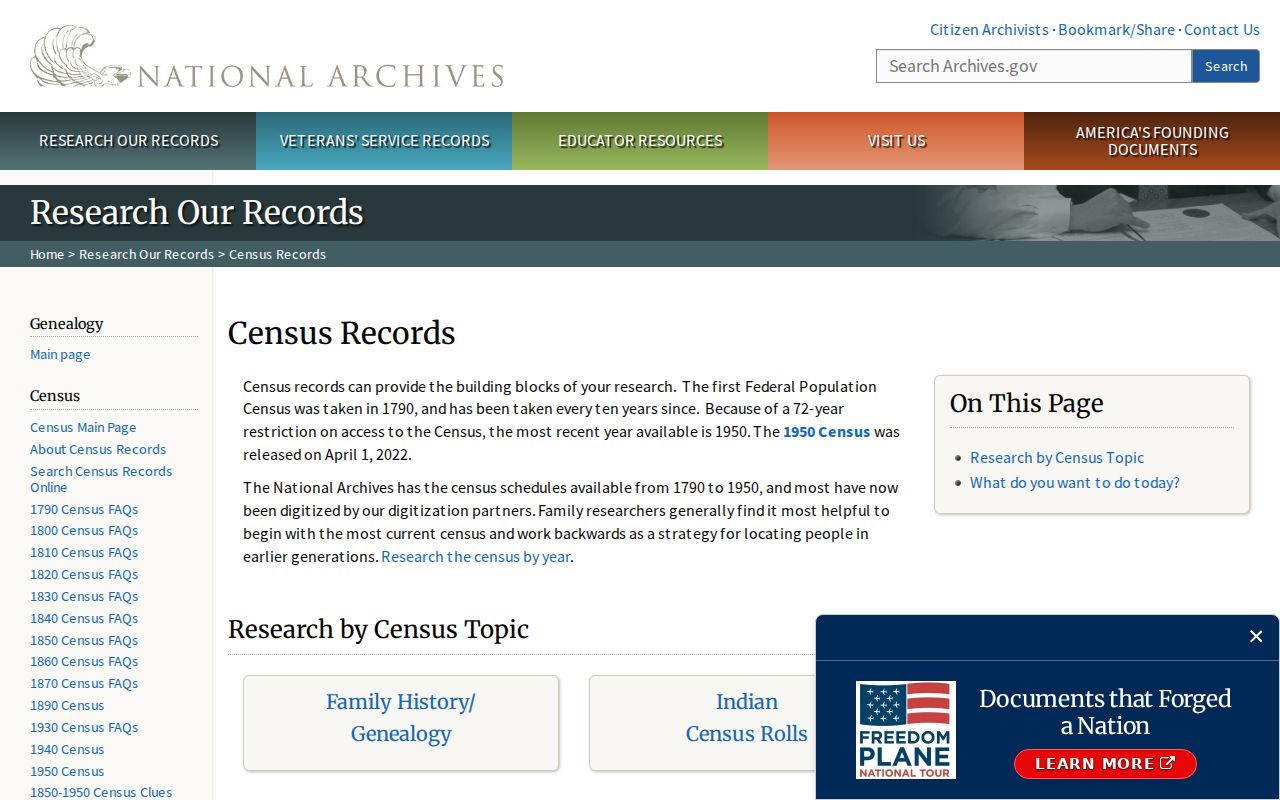
The census channel supplies historical population context, not a substitute for a missing Aliso Viejo city directory or a modern resident roll.
A federal court clue is another lane. The PACER federal case locator provides party and case indexes with docket documents for federal matters, not city-directory pages.
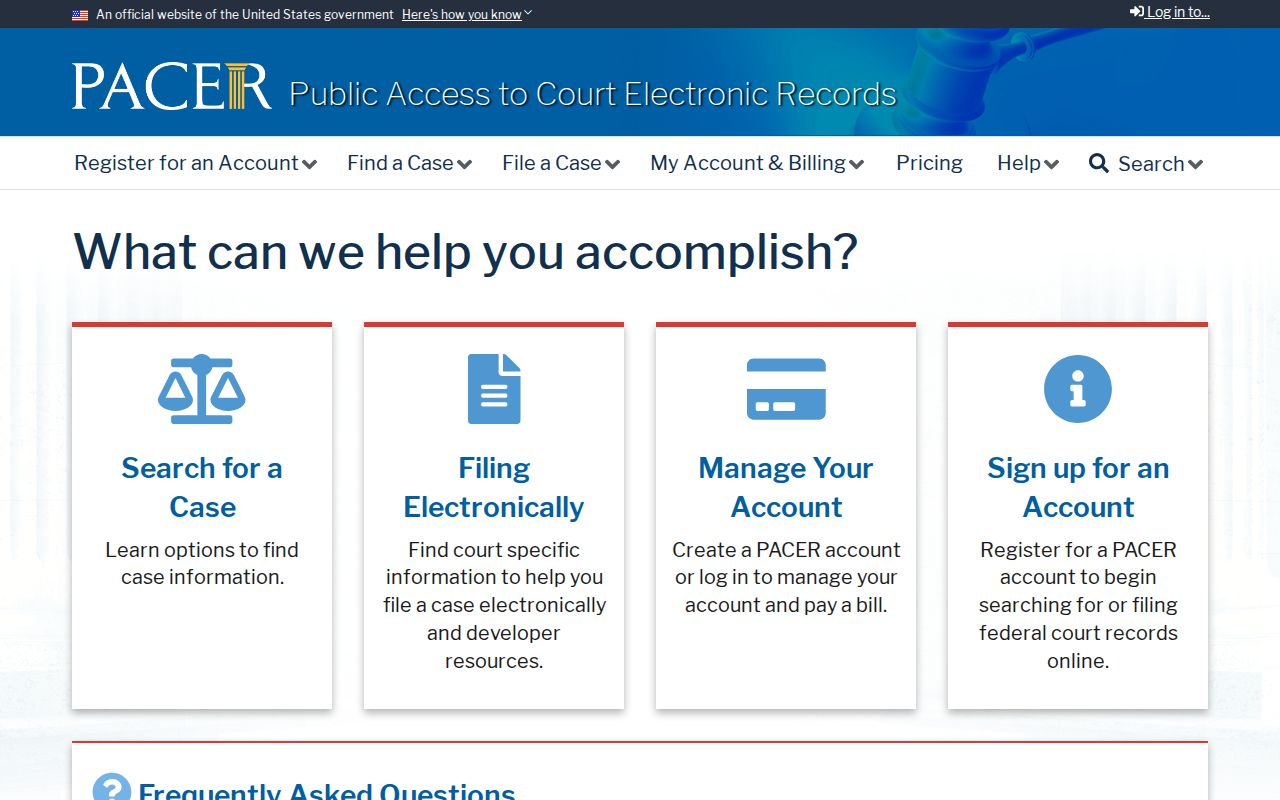
A federal docket can corroborate a name and case role, but it verifies litigation identity, not character or a present address.
Aliso Viejo Directory Gaps
No official catalog page located in the research proves a named publisher and exact year run for an Aliso Viejo city or criss-cross directory. Do not invent Polk or Cole years. The Pacific Bell and Cole examples are real, but they are property-specific evidence from one environmental review. They show how a city directory may surface in a secondary document, not that a library holds a complete residential set.
Coverage gaps come from unlisted numbers, opt-outs, regional boundaries, missing editions, and inconsistent indexing. Preserve original spelling and search with and without punctuation or diacritics when normalization is unknown. Aliso Viejo Library collections include Arabic, Chinese, French, German, Italian, Japanese, Korean, Persian, Russian, and Spanish material. California's AB 64 changes specified diacritical marks on vital records, but it does not make an old directory complete.
Aliso Viejo's planned-city setting adds a boundary. AVCA maintains common landscape and enforces CC&Rs; City government manages public services; title and tax records remain county matters. The City and AVCA responsibility explanation places a clue with the right custodian.
Note: A regional volume can be useful evidence even when its title does not say Aliso Viejo, but its geographic scope must be checked.